EdTech SaaS Platform
The challenge
As the Project Lead, I was responsible for delivering interactive educational content to more than 800 schools. However, user data and field feedback revealed a structural issue: teachers were not using the platform to its full potential.
I identified that the main adoption barrier was not a lack of educational content, but the absence of user autonomy and flexibility. Teachers wanted ready-made learning materials while also expecting the freedom to adapt them—something the platform's closed content formats could not provide.
My approach
To preserve pedagogical quality while making development economically sustainable, I advocated replacing the concept of a sophisticated open-ended authoring tool with a system of interactive templates.
- Defining the solution: Instead of investing in a fully open editor that would have significantly exceeded the available budget, I proposed a balanced alternative: a template-based authoring tool built around predefined interactive components.
- Agile prototyping & UX research: I took on the role of UX Researcher. Together with the UI Designer, we created high-fidelity prototypes, which I then validated through moderated usability testing to evaluate usability, intuitiveness, and interaction flow.
- Handover to development: I translated validated hypotheses and observed user behaviors into actionable product requirements for the development team.
Sample 1
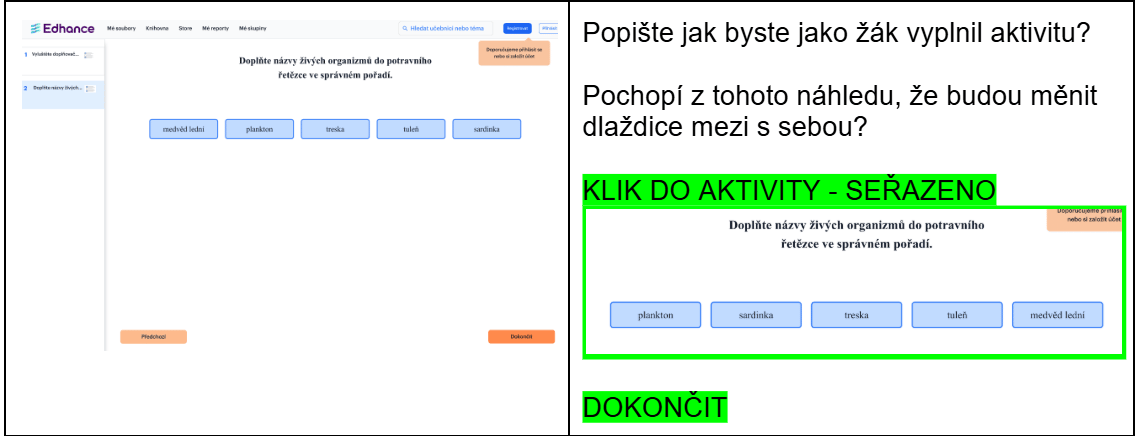 User testing scenario focused on activity control intuitiveness.
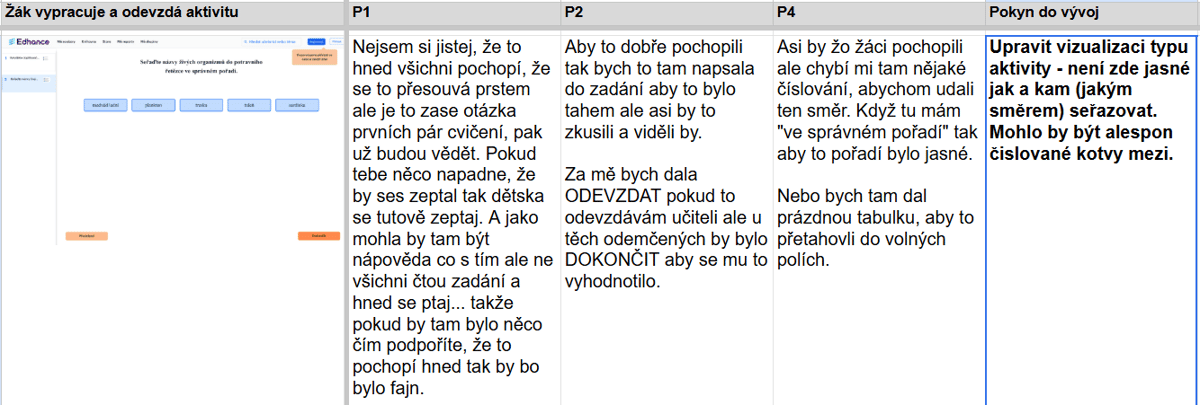 Synthesis of user testing data: identifying interaction barriers.
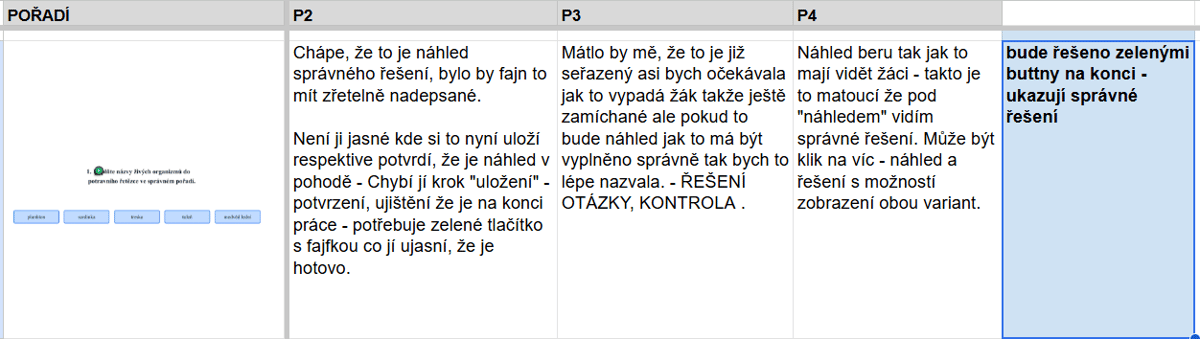 Evaluation of "ordering" activity type testing and its comprehensibility.
Sample 2
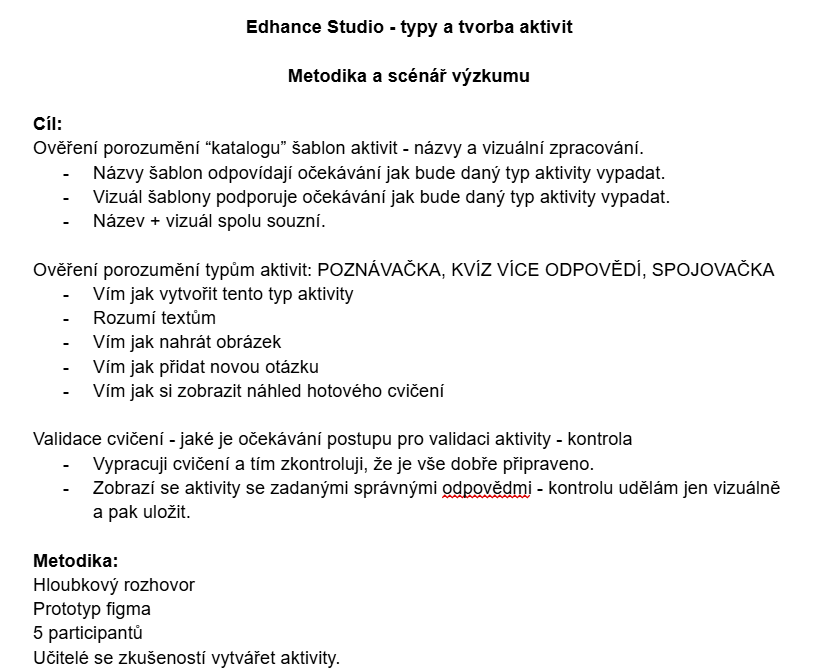 Research scenario methodology for validating template catalog clarity.
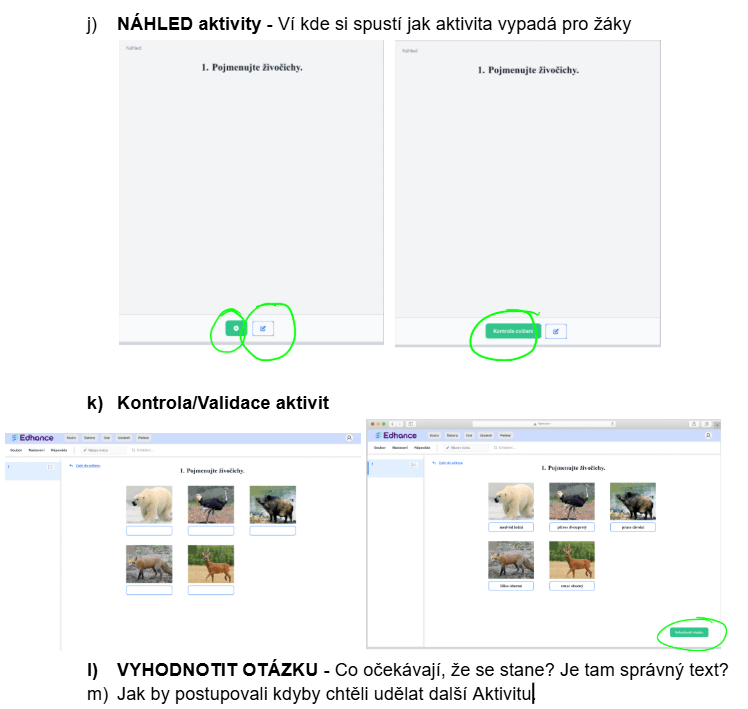 Scenario for validating user behavior during activity validation and preview.
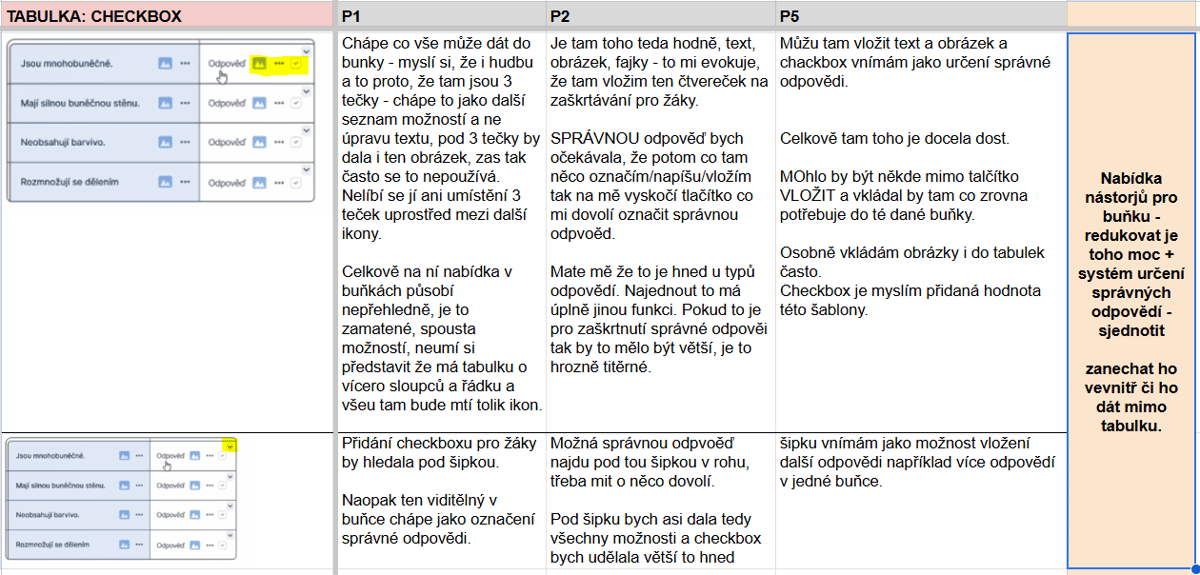 Synthesis of testing results and defining requirements for UI control updates.
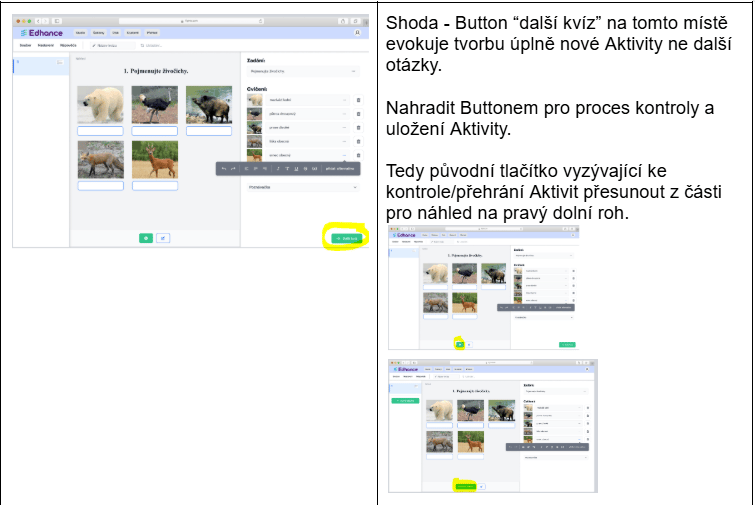 Synthesis of testing results and defining requirements for UI control updates.
Key takeaways
Protecting the budget through UX research: Developing a fully open authoring environment would have been technically complex and financially demanding. Validating user behavior on interactive prototypes allowed us to confidently pursue a template-based solution, a strategic compromise that significantly reduced development costs while giving users the flexibility they were looking for.
Identifying the gap between what users say and what they do: During in-depth interviews, teachers often described how they believed the product should work. Once they interacted with working prototypes, however, their actual behavior frequently contradicted those assumptions. This taught me to recognize common research biases and base product decisions on observed user behavior rather than stated preferences.
Reflection
This project taught me to distinguish between what users say they want and how they actually behave. It also became an important lesson in balancing competing priorities.
On one side were non-negotiable domain requirements: pedagogy, methodology, and instructional design. On the other stood the realities of product development: limited resources, development costs, and the need to prioritize. I learned to evaluate decisions through both the user and business perspective, focusing on changes that create meaningful value for the product as well as for the organization.