Transforming Learning from VR to AR
The challenge
The original business model was built around virtual reality (VR). In practice, however, VR proved to be a logistical challenge that delivered more of an occasional "wow" effect than a scalable learning solution. The product therefore pivoted to mobile AR.
The requirement to keep costs to an absolute minimum came with a major limitation. The selected AR platform offered no user interactivity whatsoever. Every interaction had to be hard-coded in advance, which posed a significant risk to both the learning experience and the educational objectives.
My approach
Rather than fighting the technology, I accepted its limitations as a fixed design constraint and structured the process into three phases.
- Discovery and MVP testing: Instead of relying on user interaction, I focused on creating a strong visual flow. I designed five different AR lesson prototypes and validated them through user testing with both subject matter experts and end users.
- Designing the instructional framework: Based on research findings, I identified the level of interaction users actually needed and created reusable content design templates that established a consistent instructional framework.
- Production: I oversaw the quality of every microlearning lesson and, over the following five months, delivered 168 final AR learning scenarios to the development team.
Sample 1
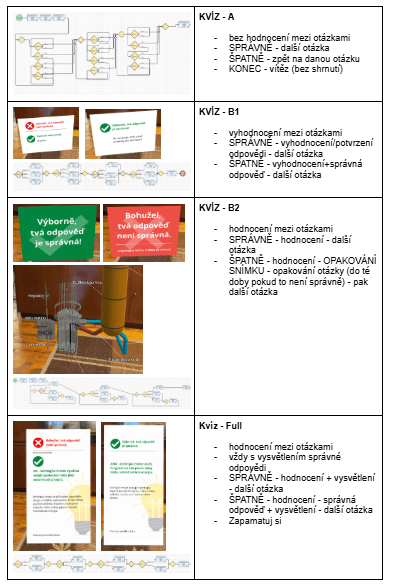 Designing the logic of quiz scenarios to test different forms of user feedback in AR.
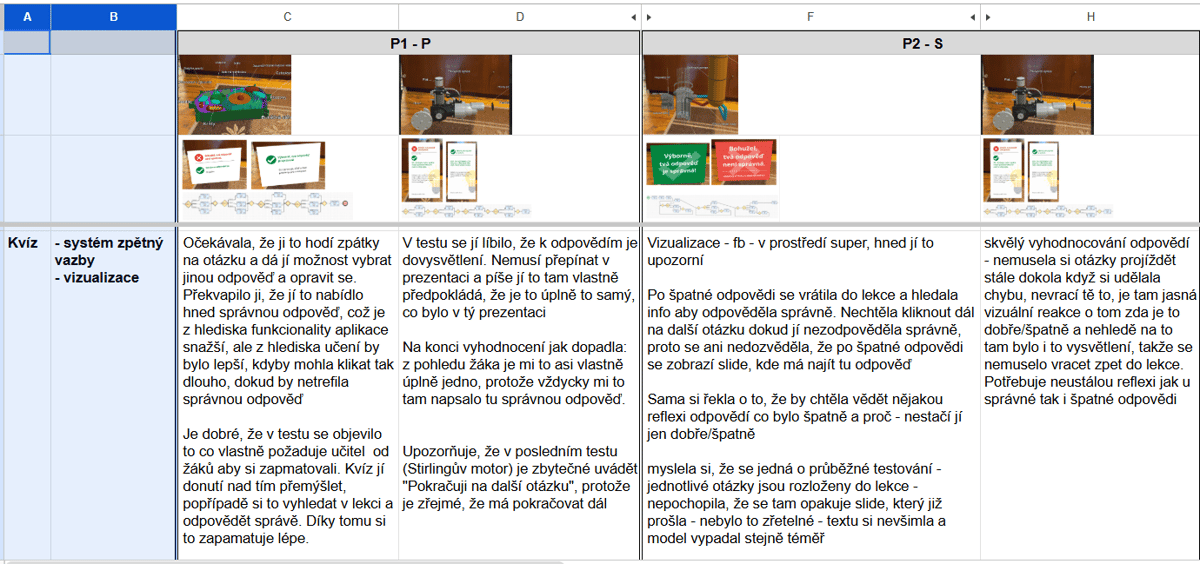 Analyzing user behavior in an AR environment: identifying key areas for adjusting the instructional framework.
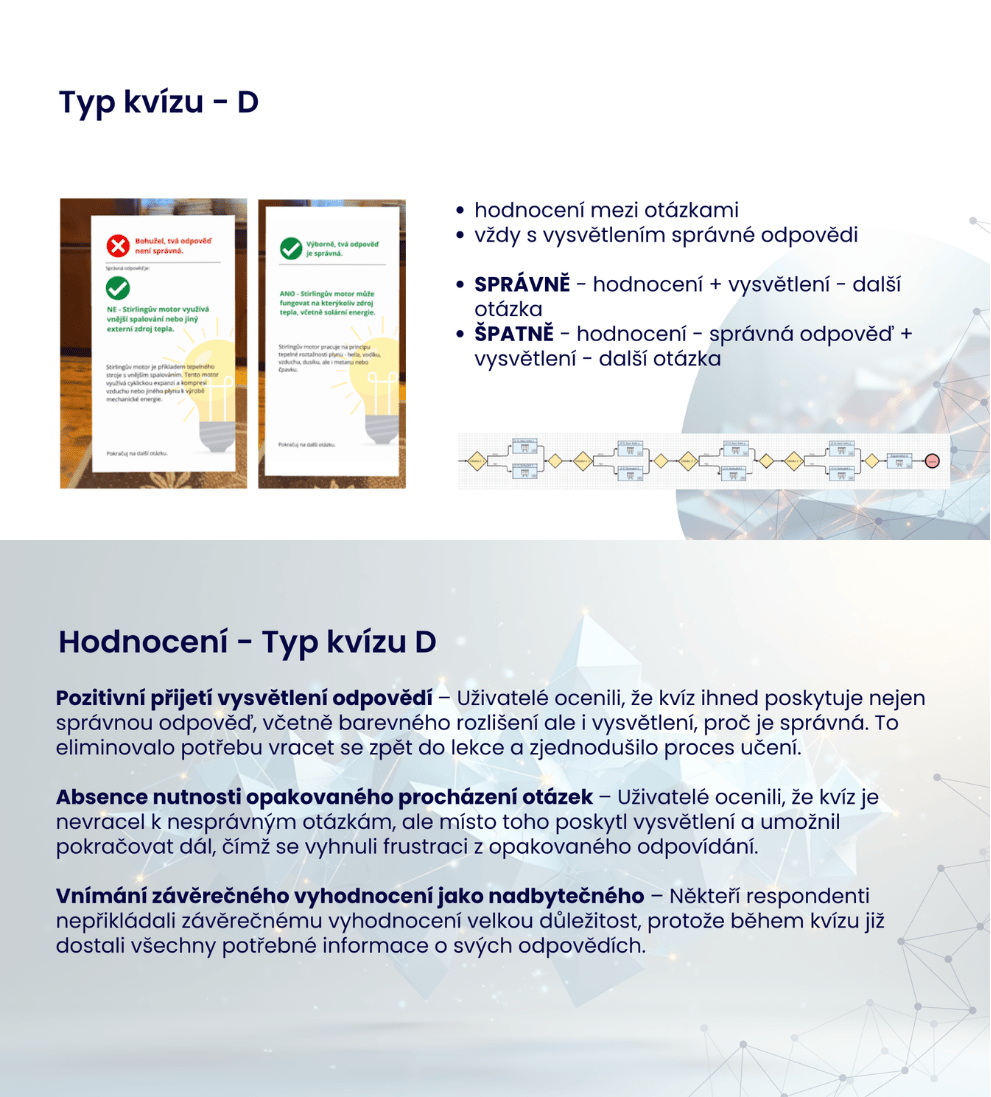 Validated methodology for efficient quiz evaluation, with an emphasis on instant feedback.
Sample 2
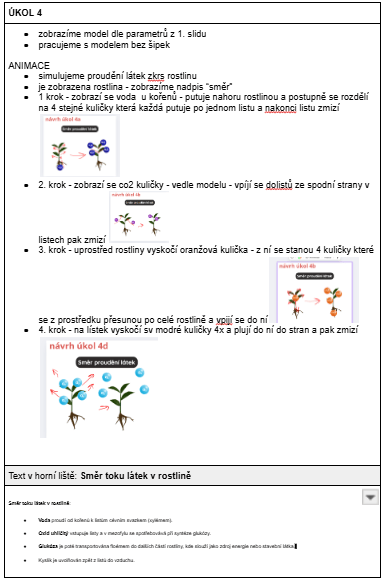 Technical specification – scenario for development and animation in an AR lesson.
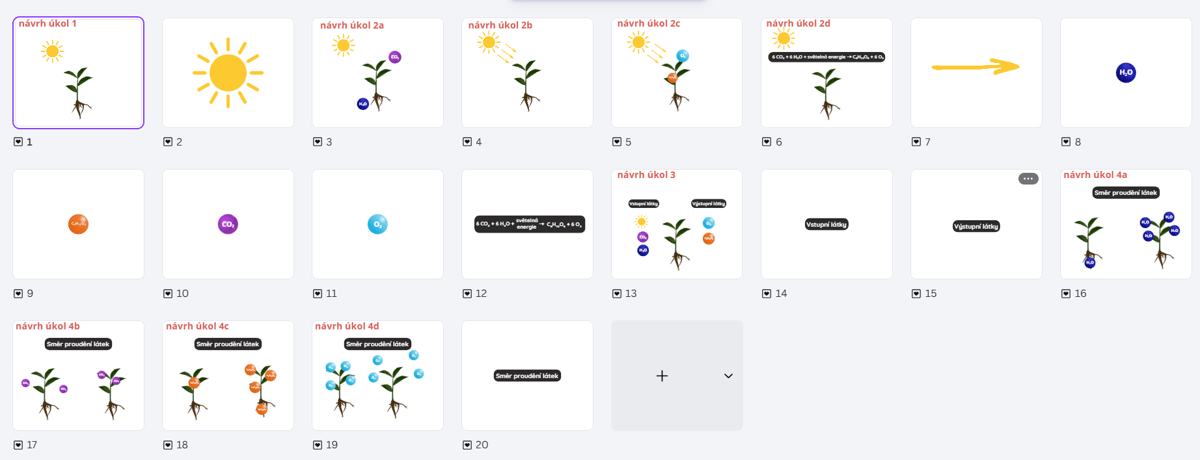 Set of graphic assets to supplement the AR model.
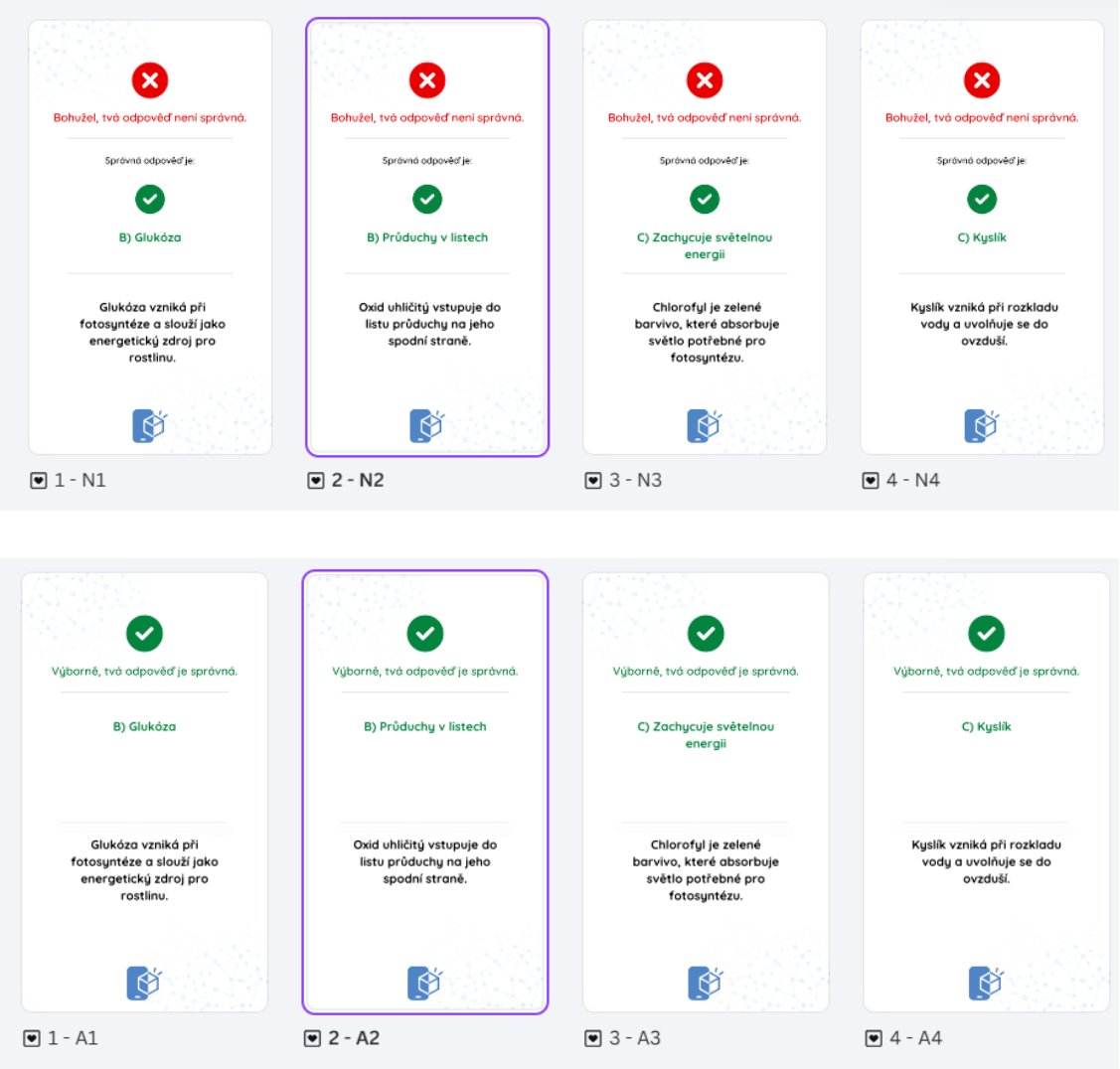 Templates for automated production of learning lessons.
Key takeaways
Reducing educational scope: In an environment without interactivity and with very limited screen space, it was impossible to achieve every learning objective for a given topic. I aligned stakeholders around reducing the scope and focusing on concise microlearning experiences that avoided overwhelming learners.
Identifying patterns and creating reusable templates: I analyzed the available 3D models and identified recurring structural patterns. Based on this typology, I designed universal templates that significantly accelerated both content structuring and learning experience design.
AI supported semi-automated production: Using generative AI for text generation alone would not have achieved the required efficiency. I designed and introduced a semi-automated workflow that combined AI generated content with automated production of visual assets and infographics. This integrated approach reduced overall production time by 50%.
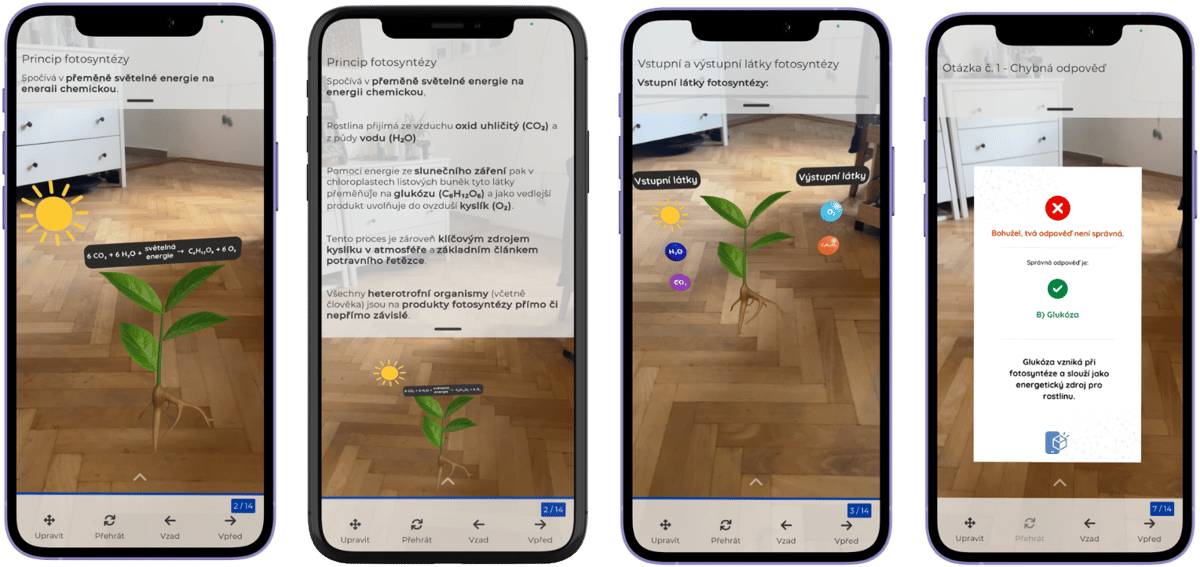 Showcase of a completed lesson in a mobile AR app, demonstrating the applied instructional framework.
Reflection
This project became a masterclass in pragmatic product design. The greatest challenge was not designing the learning content itself but managing my own ambitions and vision of the ideal learning experience.
AR technology offered enormous creative possibilities and I had many ideas worth pursuing. However, I had to accept that most of them were simply too expensive to build. Instead of striving for perfection, I focused on designing a production process capable of delivering lessons quickly, cost effectively, and with consistent quality despite significant technical constraints.
The project reinforced an important principle for me: sometimes the best solution is not the most sophisticated one, but the one that successfully balances budget, technical limitations, and business goals.